
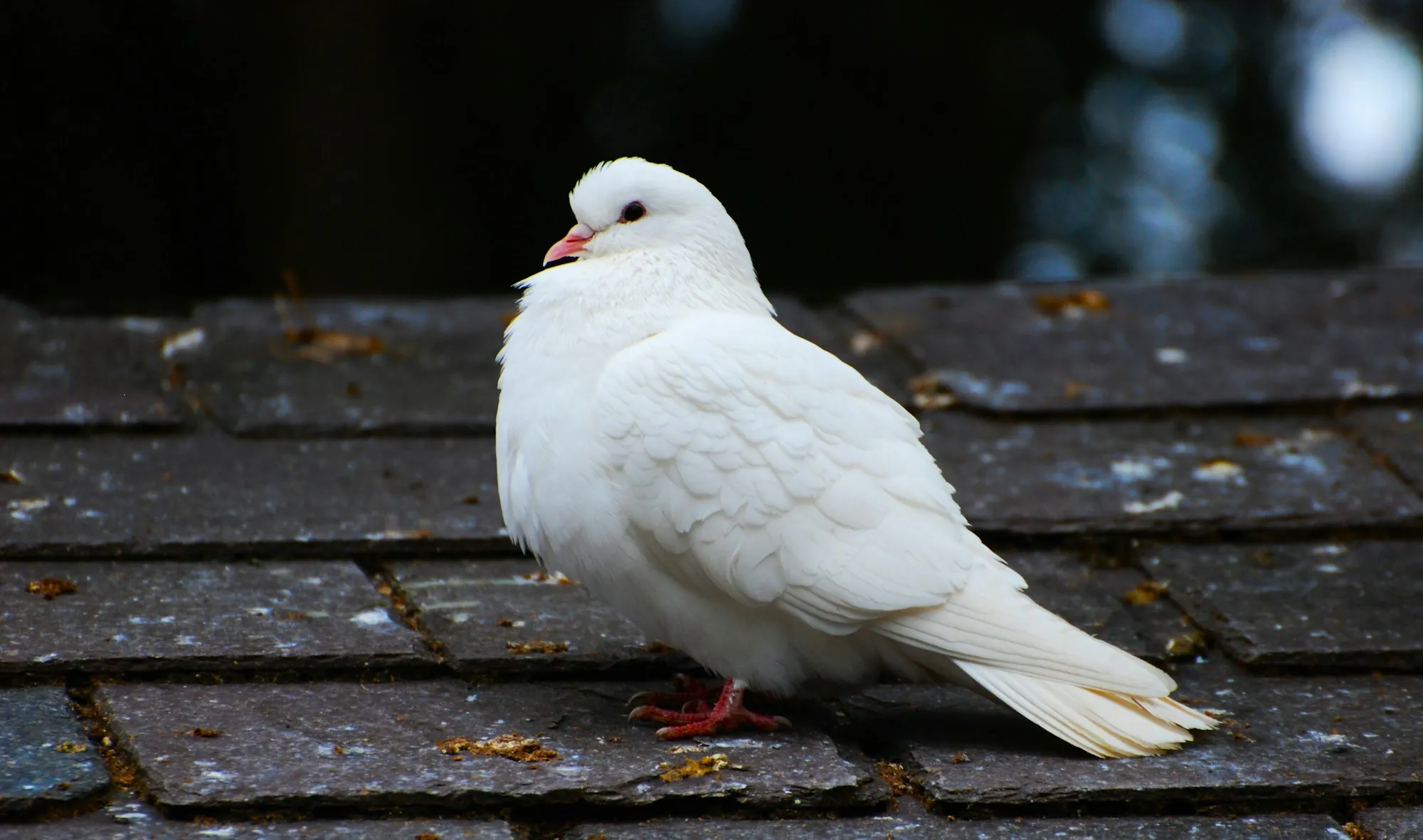
Here is a fact that surprises many homeowners: in Illinois, pigeons have almost no legal protection. Wildlife Illinois notes that they are an introduced species, not covered by the Migratory Bird Treaty Act or the Illinois Wildlife Code, and that no permit is needed to remove pigeons or their nests. That matters on a solar roof, because the shaded gap under an array is one of the most attractive nesting spots in Matteson. And the bird and debris buildup under solar panels does real damage to the roof underneath, long before anyone notices it from the ground.
This post walks through what actually collects under an array, how each kind of buildup affects shingles, gutters and wiring, and what fixes it.
What collects under solar panels?
The space between a rooftop array and the shingles is usually only a few inches tall, open on every side, and sheltered from rain and wind. Birds treat it as a covered ledge. Leaves and seeds blow into it and stay there because nothing washes them out.
Over a season or two, a typical buildup includes:
- Nests of sticks, straw and grass, often stacked near the lower edge of the array
- Droppings, which collect wherever birds perch and nest
- Feathers, eggshells and, sometimes, dead birds
- Leaves, seed pods and twigs from nearby trees
- Grit and shingle granules that wash down and get trapped
Wildlife Illinois describes pigeon nests as flimsy platforms of sticks and straw, built on ledges of buildings and similar structures. Under a panel, those platforms pile up, because nothing disturbs them and new nesting material lands on top of old.
How does trapped debris damage shingles?
Debris under an array damages shingles mainly by holding water against them. A clean roof sheds rain and dries in the sun and wind. A roof with a mat of wet leaves, nest material and droppings stays damp underneath that mat, sometimes for a long stretch after the rain stops.
Asphalt shingles are built to get wet and dry out, not to stay wet. Constant moisture works on the shingle surface and the seams between shingles. Over time it can loosen granules, encourage moss and algae, and give water more chances to find its way through the overlaps to the underlayment and deck.
The location makes it worse. The panels block the sun that would normally dry the roof, and they hide the problem. A section of shingles can deteriorate under an array while the open slopes of the same roof look fine.
Water that cannot drain
Roofs depend on water running straight down to the gutters. A nest or a clump of debris wedged between rows of panels acts like a small dam. Water pools behind it and spreads sideways, which is exactly the direction shingle laps are least able to handle. In heavy rain, that ponding water can work back up under the shingle above it.
What do droppings and nests do besides look bad?
Bird droppings are the most visible part of the problem and the one with the most health questions attached. According to Wildlife Illinois, pigeon droppings can carry the organisms linked to toxoplasmosis and salmonellosis and can harbor the spores that cause histoplasmosis. Large deposits left in place can also damage painted surfaces and kill plants below.
On a roof, droppings concentrate along the lower edge of the array, where birds perch, and around the nest sites. They foul the area, attract more birds, and add to the wet organic layer sitting on the shingles.
The health side is why cleanup should not be casual. The CDC’s histoplasmosis prevention guidance says activities that disturb soil containing bird or bat droppings can raise the risk of infection, and that large amounts of droppings should be cleaned up by companies that specialize in hazardous waste removal. If there is a heavy buildup under your array, do not climb up with a broom and a leaf blower. Ask a professional how the cleanup will be handled, and if anyone in the house is in a higher-risk group, mention it.
Gutters, downspouts and winter ice
Debris under panels does not stay under panels. Every rain moves some of it down the roof and into the gutters. Twigs, nest material and granules settle in the gutter trough and work their way into downspouts.
A clogged gutter overflows in a storm and dumps water against the fascia and foundation. In a Chicago-area winter, it also holds snowmelt at the roof edge, where it refreezes. That is how ice dams form along the eaves, and ice dams push water back up under the lowest courses of shingles. Homes across Matteson, Richton Park and Olympia Fields go through plenty of freeze and thaw cycles in a south Cook County winter, so a gutter that stays packed with debris from the array is a winter problem as much as a summer one.
If you clean your gutters and keep finding sticks, straw and feathers, that is a strong hint that something is nesting under the panels.
Can nests and debris affect the solar wiring?
Nesting material collects around the same places the system’s wiring runs: under the panels, along the racking and near junction boxes. Packed nests hold moisture and dirt around connectors and conduit that are meant to stay clear and dry. Animals that move in and out can also disturb loose wiring.
You will not usually see this from the ground. A drop in production, an alert from the monitoring app, or birds coming and going from under the panels are all reasons to have the system checked by whoever services it. Anything electrical on the array is a job for a qualified pro, not a ladder project for the homeowner.
A quick reference: buildup type and roof effect
| What builds up | Where it collects | What it does to the roof |
|---|---|---|
| Nests of sticks and straw | Lower edge and gaps between panels | Blocks drainage, holds moisture, adds debris to gutters |
| Droppings | Perches, nest sites, array edge | Fouls shingles, attracts more birds, needs careful cleanup |
| Leaves and seeds | Behind racking and in low corners | Forms a wet mat that keeps shingles damp |
| Feathers and grit | Everywhere under the array | Washes into gutters and downspouts |
What stops the buildup from coming back?
Clearing out the nests is only half the job. Once the gap under the array is open again, birds return to the same spot. The fix is to close the perimeter so nothing can get underneath in the first place.
That is what critter guard does. A non-penetrating mesh is fitted around the outside edge of the array and clipped to the panel frames, so there are no new holes in the roof. Air still moves under the panels, but birds cannot get in and leaves are much less likely to blow in and pile up.
Sequence matters. The space under the panels should be cleaned before the mesh goes on, otherwise you are sealing the problem in. And if the shingles under the array are already soft, stained or badly worn, that is the moment to talk about taking the panels down and dealing with the roof first.
Pigeons are fair game under Illinois rules, but other birds can be protected. The U.S. Fish and Wildlife Service lists the rock pigeon among non-native birds outside the Migratory Bird Treaty Act, and Wildlife Illinois adds that removal methods must not endanger native birds nearby. If you are not sure what is nesting on your roof, check before anything is removed.
What to do if your array has company
Start with what you can see from the yard. Birds flying in and out from under the panels, droppings streaking the lower edge, or gutters full of sticks and feathers all mean the space under the array is in use. If any of that sounds familiar, get the buildup cleared by someone equipped to handle droppings safely, have the shingles checked while the area is exposed, and then close the perimeter so the cycle stops. Leave it for another winter and the gutters, the shingles and the space around the wiring all take more of the hit.
Our solar panel critter guard page explains how the mesh fits around an array, and if the roof under the panels needs work, the detach and reset service covers taking them off and putting them back. Solar Panel Removal Matteson handles both, and the homepage has the full picture.